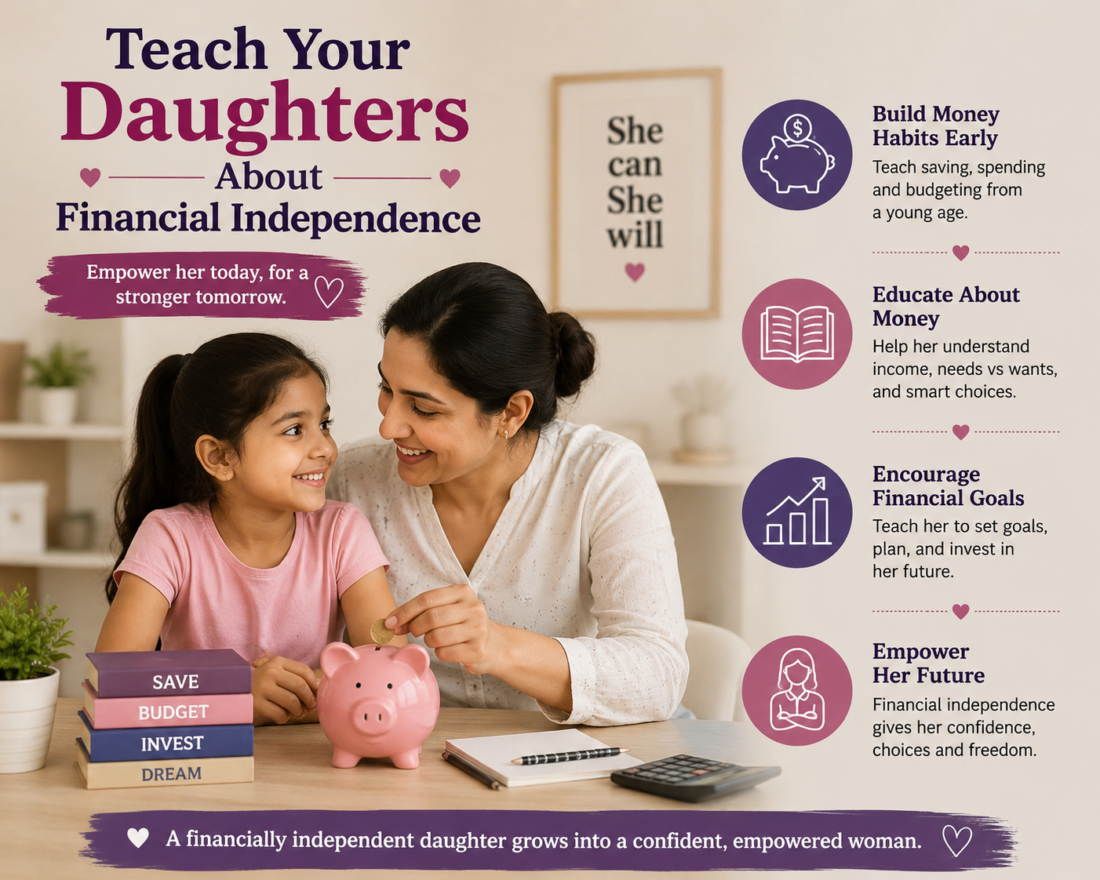
Woke up to this imagery this morning from a trailblazer of a woman that I feel nothing less than gratitude and admiration for.
Today, more than ever, teaching our daughters about financial independence is crucial. With the rise of economic challenges, it’s imperative that they understand the value of earning, saving, and investing money wisely. This not only prepares them for their future but also instills confidence and self-reliance.
Nawal El Saadawi’s unwavering spirit and commitment to women’s rights serve as a powerful reminder of the importance of empowering women through education and financial literacy. Her life and work inspire countless individuals to pursue justice and equality.
By creating an environment where financial discussions are normal, we help daughters feel comfortable navigating the financial landscapes they will encounter in adulthood. This also encourages them to ask questions and seek advice.
Encouraging sons to be involved in household tasks not only equips them with necessary life skills but also sets a precedent for future partnerships. Teaching them to cook, clean, and manage responsibilities ensures they are well-rounded individuals.
Nawal El Saadawi (Arabic: نوال السعداوي, DMG Nawāl as-Saʿdāwī; born October 27, 1931, in Kafr Ṭaḥla, Egypt; died March 21, 2021, in Cairo) was an Egyptian writer and human rights activist, particularly for women’s rights.
Daughters should be encouraged to build their own financial independence, confidence, and ability to support themselves.
Understanding and drawing inspiration from such trailblazers nurtures a sense of purpose and strength in our children. This can help them become advocates for their own rights and the rights of others.
Sons should learn how to care for themselves and contribute equally at home through cooking, cleaning, and other household responsibilities.
In today’s fast-paced world, equipping our children with financial independence and essential life skills ensures they can navigate future challenges and seize opportunities.
https://womenshapingfutures.org
Financial independence can serve as a springboard for daughters to tackle career opportunities and fulfill their ambitions without hesitation or fear of financial insecurity.
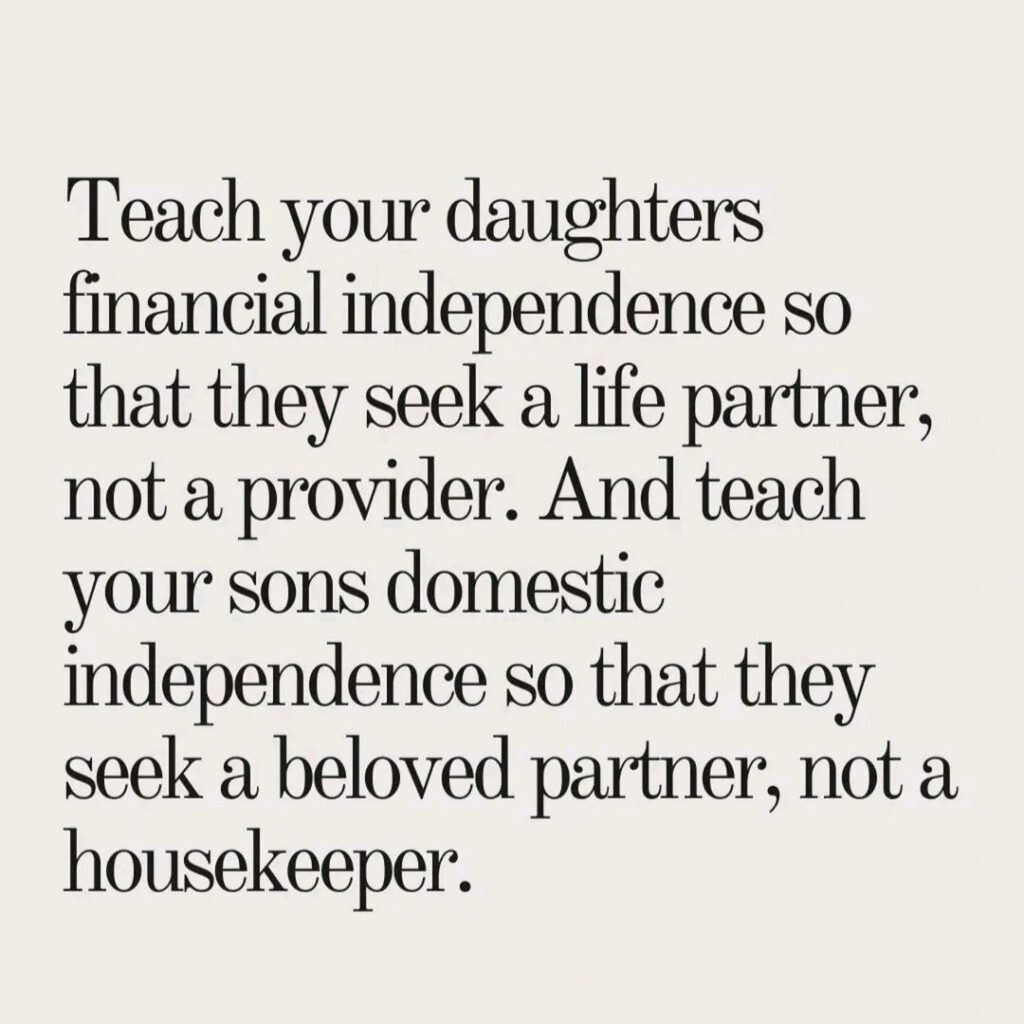
Understanding Financial Independence: A Key to Empowerment
Financial independence encompasses more than just having money; it involves building skills, understanding markets, and making informed decisions that align with one’s values and goals.
Taking steps towards financial independence fosters a sense of security and peace of mind, allowing women to take calculated risks and pursue their passions without being held back by financial constraints.
Encouraging daughters to engage in discussions about money management can demystify financial concepts and help them become more adept at making significant financial decisions in the future.
Nawal El Saadawi
Ultimately, financial independence is about creating a safety net that empowers women to face life’s uncertainties with confidence, allowing them to pursue their passions and aspirations freely.
Moreover, as we teach our sons vital life skills, they learn to appreciate the effort that goes into maintaining a household and can build more equitable relationships in the future.
Empowering Our Daughters and Sons for a Brighter Future
These skills foster a sense of accountability and respect, which are essential traits for building strong, lasting relationships with partners and family members.
Teaching these skills promotes equality in the household and encourages boys to become proactive contributors to family life.
When children see their parents engaging in shared responsibilities, they are more likely to replicate these behaviors in their own lives and relationships.
Why Daughters Need Financial Independence and Sons Need Life Skills
As they develop these essential life skills, sons grow into young men who value collaboration, respect, and the importance of shared responsibilities within a family.
These practical experiences allow them to appreciate the hard work that goes into running a household and may inspire them to take on these responsibilities willingly.
As mothers and fathers contribute equally to domestic tasks, they model the kind of teamwork that children will carry into their own future relationships.
Raising self-sufficient adults means giving them the tools they need to thrive, which includes an understanding of healthy relationships, responsibility, and emotional intelligence.
Teaching children about emotional intelligence helps them recognize their own feelings and the feelings of others, which is crucial for building strong connections in their personal and professional lives.
Emotional intelligence coupled with practical life skills creates a holistic approach to development that empowers children to handle challenges with grace and confidence.
By nurturing these attributes, we prepare our children not just for success in their careers but also for meaningful contributions to society.
As parents, one of the most significant impacts we can have on our children is to prepare them for adulthood by instilling values of independence, responsibility, and resilience in the face of challenges.
For generations, society often taught girls to depend financially on others while boys were excused from learning essential household skills. Today, families have the opportunity to raise children differently—raising young women who are financially confident and young men who are fully capable of caring for themselves and contributing equally within the home.
We are shaping future generations who possess the resilience needed to tackle both personal and global challenges head-on.
Fostering these skills from an early age ensures that our children become leaders in their communities, advocates for equality, and champions of financial independence.
Ultimately, the lessons we impart will enable them to thrive in a rapidly changing world, where adaptability and innovation are key.
As parents, the onus is on us to cultivate environments that encourage exploration, learning, and growth.
By teaching both financial literacy and essential life skills, we empower our children to become self-sufficient adults who can navigate both financial and emotional landscapes with ease.
We are not just guiding them to succeed; we are equipping them to understand their worth, advocate for themselves, and build fulfilling lives.
This journey of empowerment will shape their futures and contribute to a stronger, more equitable society.
“The ability to create and steward one’s life with wisdom, confidence, and compassion is the greatest legacy a parent can leave.”
what does financial independence mean?
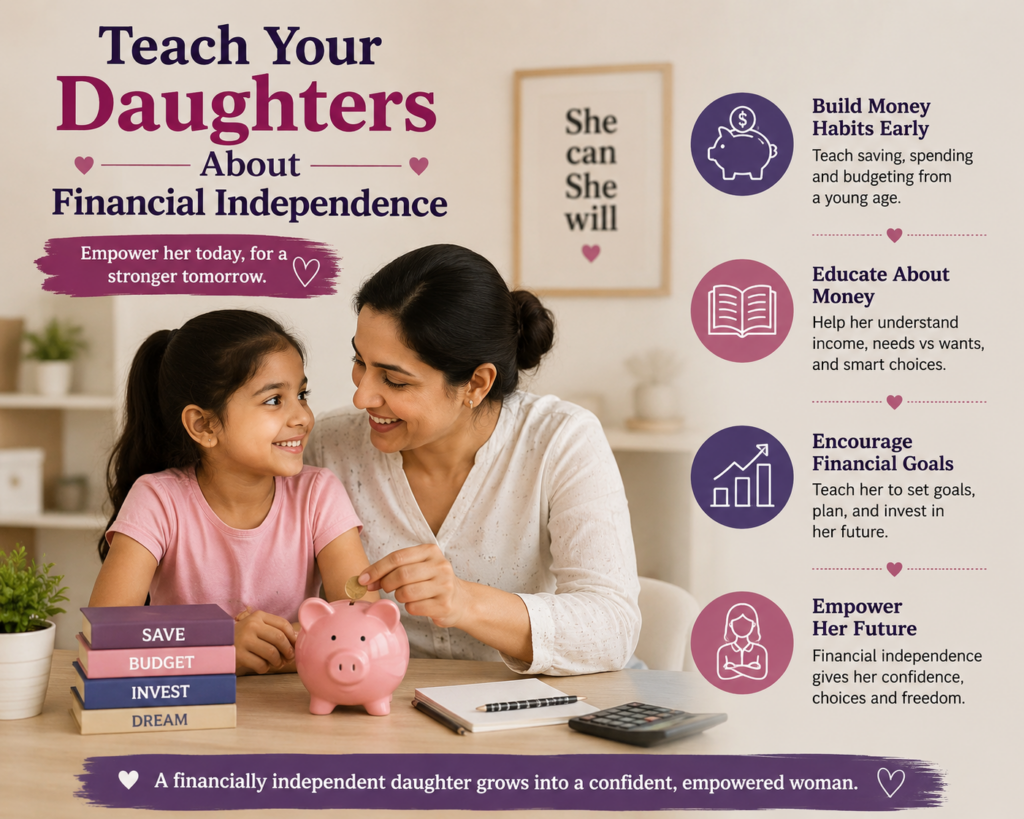
Teaching Daughters Financial Independence
As we reflect on our role as parents, let us commit to fostering resilience and independence in our children, ensuring they are well prepared for whatever life may bring.
Our commitment to this cause will resonate through the generations, as empowered children become empowered adults.
By investing in their education, values, and skills, we create a brighter future for them and for society as a whole.
In conclusion, instilling financial independence in our daughters and essential life skills in our sons is not only beneficial to them individually but also contributes to a more just and equal society.
Let us all strive to be the guiding force that inspires our children to embrace their potential fully.
Every daughter deserves to know that she is capable of supporting herself, making wise financial decisions, and building a secure future. Encouraging financial literacy from an early age helps girls develop confidence, self-worth, and independence. Financial knowledge empowers women to make choices based on their values and dreams rather than necessity. Studies consistently show that financial education and early money management experiences help young people develop lifelong healthy financial habits.
Parents can nurture financial confidence in daughters by:
- Teaching budgeting, saving, and investing.
- Encouraging part-time jobs or entrepreneurial ventures.
- Discussing money openly and honestly.
- Helping them establish financial goals.
- Teaching the importance of building and maintaining good credit.
Financial independence is not about rejecting relationships or family. Instead, it provides freedom, security, and confidence. Women who understand finances are often better equipped to navigate life’s unexpected challenges, including career transitions, divorce, widowhood, or economic hardship. Financial empowerment allows women to pursue relationships out of love and partnership rather than dependence.
Teaching Sons Essential Life Skills
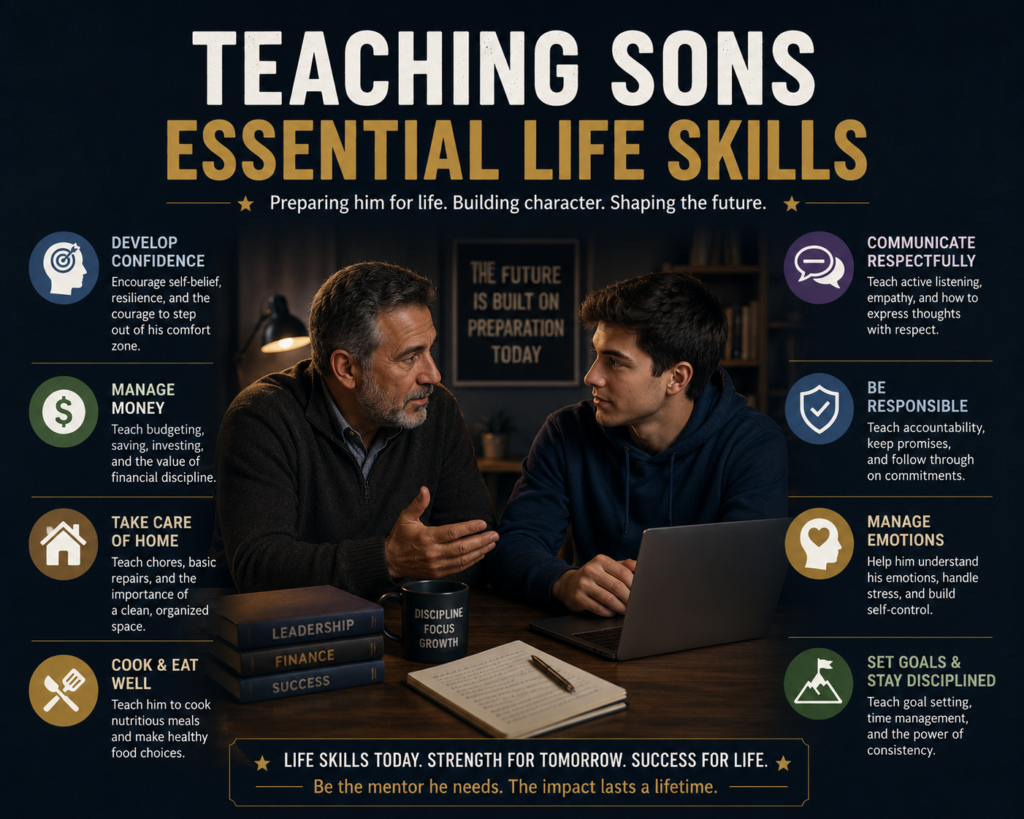
Equally important is teaching sons that household responsibilities beyond financial independence are not “women’s work”—they are life skills. Cooking, cleaning, laundry, meal planning, and caring for a home are essential competencies every adult should possess.
When boys learn these skills early, they develop responsibility, empathy, and self-sufficiency. They also enter adulthood prepared to contribute as equal partners in future relationships. Teaching sons domestic skills communicates an important message: caring for others and maintaining a home are shared responsibilities. This perspective promotes healthier, more balanced relationships and fosters mutual respect.
Practical ways parents can teach sons include:
- Assigning age-appropriate household chores.
- Teaching basic cooking and meal preparation.
- Showing them how to do laundry and manage household tasks.
- Encouraging them to care for younger siblings or family pets.
- Modeling shared household responsibilities within the family.
Children often learn more from what parents do than from what parents say. When fathers cook dinner, clean, and participate actively at home—and when mothers demonstrate financial competence and confidence—children begin to see that capability is not determined by gender.
The Goal: Raise Self-Sufficient Adults
Ultimately, the objective is not to teach daughters only financial skills and sons only domestic skills. The true goal is to raise capable, resilient, and compassionate adults.
Both daughters and sons should learn:
- Financial literacy.
- Household management.
- Emotional intelligence.
- Responsibility and accountability.
- Problem-solving and decision-making skills.
Children who grow into self-sufficient adults are better prepared to build healthy relationships, navigate life’s challenges, and contribute positively to their families and communities.
As parents, we are not simply raising children—we are shaping future adults. By equipping both daughters and sons with practical life skills, we prepare them not merely to survive, but to flourish.
“The greatest inheritance a parent can give a child is not wealth, but the ability to create, manage, and steward their own life with wisdom, confidence, and compassion.”
Related Posts



How To Build Resilience in Teens
Supporting Teens with Social Anxiety
Emotional Regulation Matters for Children
Recognizing Signs of Burnout in Teens
How to Identify Signs of Depression in Teens
For more resources on mental health support, financial literacy, and personal development for teens, explore the following links: